-
Denied Claims Resolution Guide: Step-by-Step Strategies to Recover Revenue Faster

For healthcare providers and billing departments, denied claims are more than just an administrative hurdle; they are a direct threat to the financial health of the practice. Statistics suggest that a significant percentage of claims are denied on the first submission, and many of these are never resubmitted, leading to billions in lost revenue annually…
-
Top Healthcare Clearinghouse Software Platforms Compared for Providers and Billing Teams

In the modern healthcare landscape, the financial health of a practice is just as vital as the clinical outcomes of its patients. As we’ve explored in our Revenue Cycle Management Guide, consistent cash flow depends on an efficient bridge between providers and payers. This is where healthcare clearinghouse software plays its most critical role—acting as…
-
How Collaborating Physicians Support Modern Healthcare Practices

The healthcare industry continues to evolve as providers work to meet rising patient demand, address physician shortages, and improve access to quality care. At the center of this transformation is the growing role of Nurse Practitioners (NPs), who are increasingly serving as primary care providers, specialty care practitioners, and healthcare leaders in a variety of…
-
Revenue Cycle Management Explained: Key Steps Every Healthcare Organization Should Know

For healthcare organizations, financial stability depends on far more than delivering quality patient care. Behind every appointment, procedure, and claim is a system that determines whether providers are paid accurately and on time. That system is known as revenue cycle management. An efficient healthcare revenue cycle process helps practices, hospitals, and billing teams reduce claim…
-
Understanding HIPAA Compliance in Claims Processing and Healthcare Data Exchange

Every day, millions of healthcare claims traverse digital networks, carrying sensitive patient information from providers to insurers, pharmacies, and other healthcare entities. Behind these transactions lies a critical framework designed to protect patient privacy and security: the Health Insurance Portability and Accountability Act (HIPAA). Understanding HIPAA compliance in claims processing and healthcare data exchange isn’t…
-
How Healthcare Clearinghouses Help Reduce Claim Rejections and Improve Accuracy
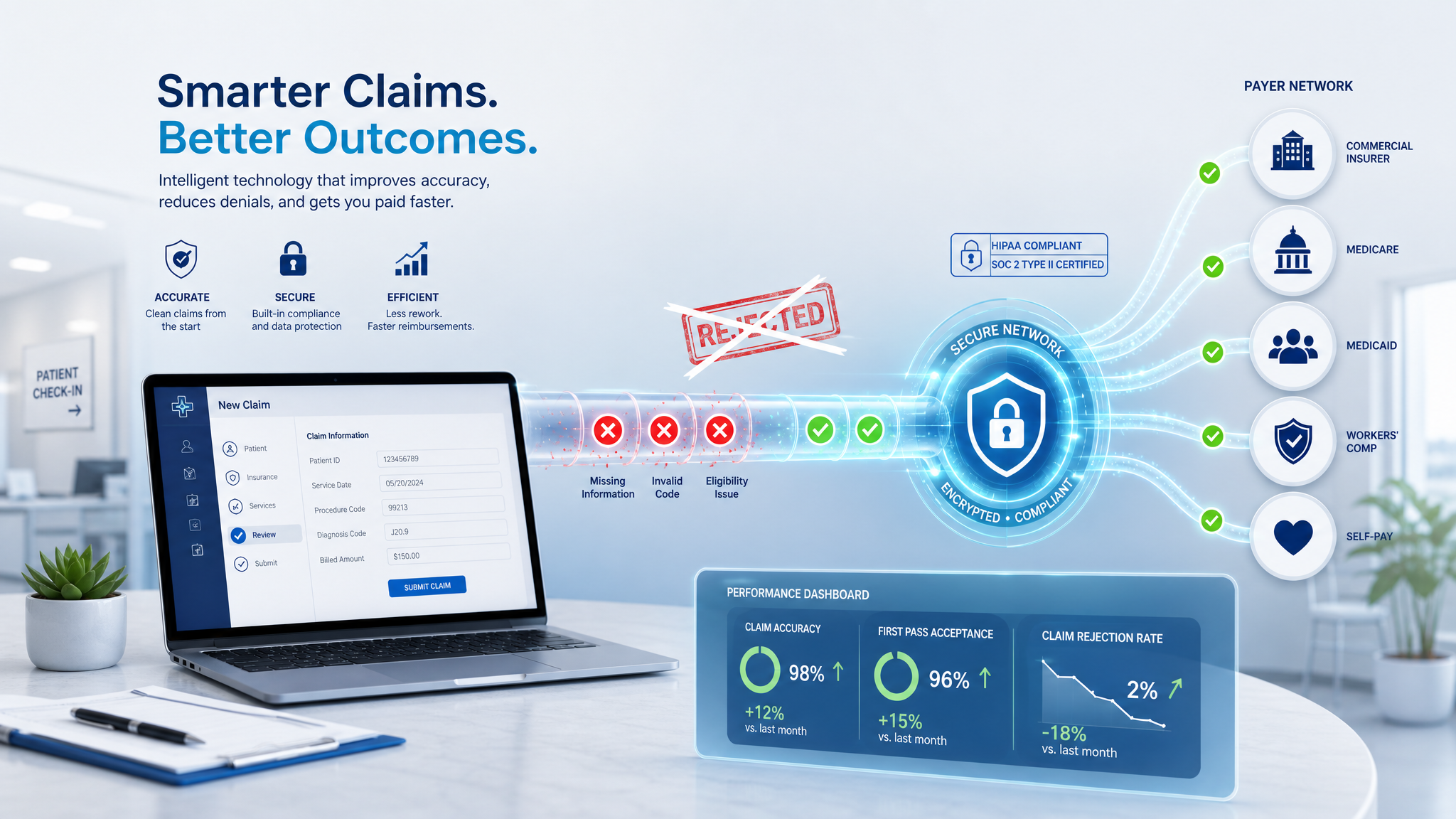
Healthcare organizations lose time and revenue when claims are rejected for avoidable reasons—missing data, coding mismatches, eligibility issues, or payer-specific formatting requirements. A healthcare clearinghouse acts as the “quality control + routing hub” between providers and payers, helping catch errors early, standardize claim files, and improve first-pass acceptance rates. This article explains the healthcare clearinghouse…
-
5 Common Medical Billing Errors That Lead to Rejections (and How to Avoid Them)

Claim rejections are one of the most preventable causes of delayed reimbursement in medical billing. While payer rules vary, a large share of denials come down to a handful of recurring, fixable mistakes—often created upstream during registration, documentation, coding, or claim creation. Below are five common medical billing errors that lead to rejections, along with…
-
What Is a Healthcare Clearinghouse and Why It Matters for Claims Processing
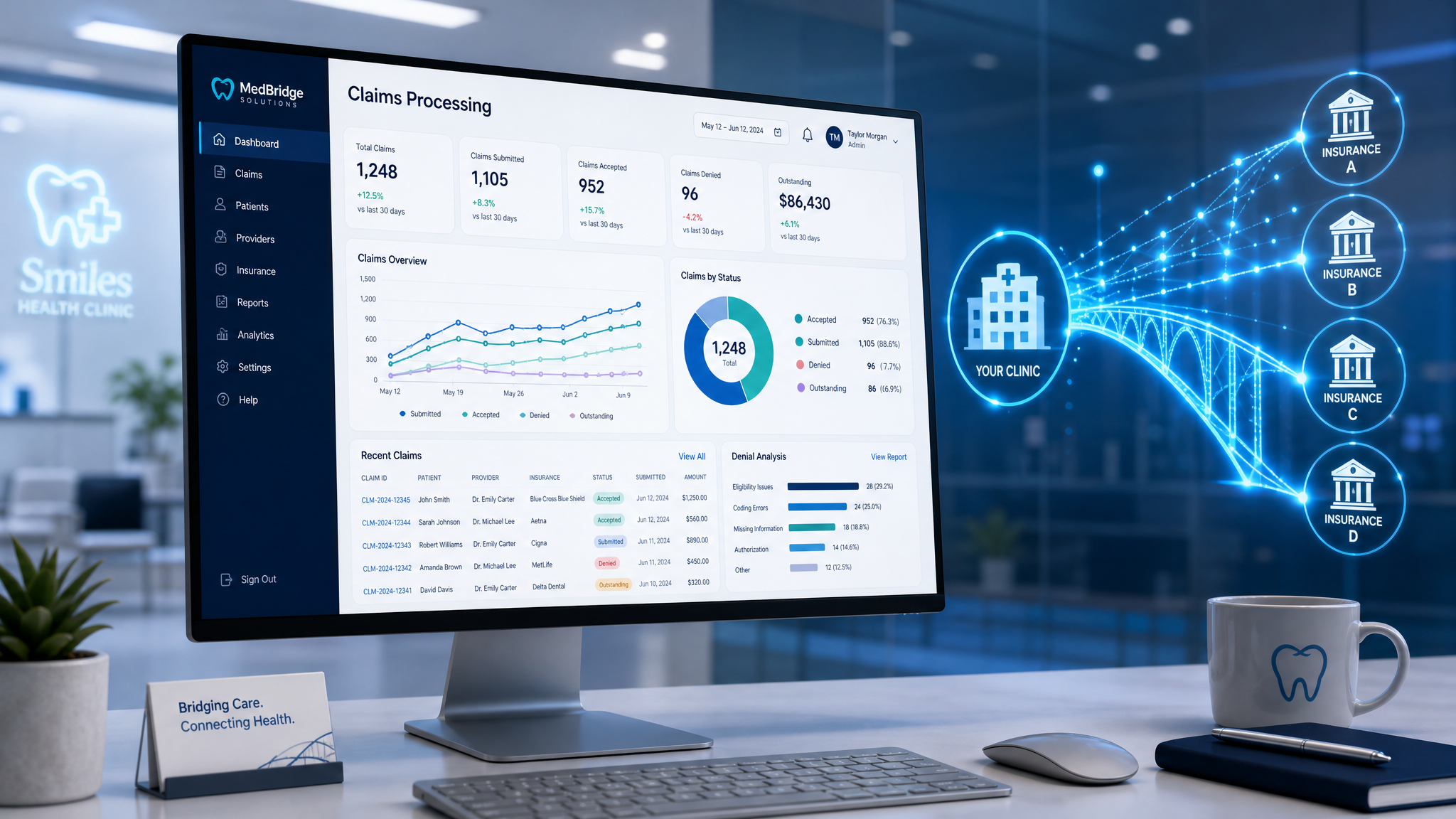
In today’s healthcare environment, accurate and efficient claims submission is essential for keeping revenue cycles healthy and operations running smoothly. Yet for many providers, the path from patient service to payer reimbursement is anything but simple. Insurance claims must be formatted correctly, checked for errors, transmitted securely, and tracked carefully to avoid delays or denials.…
-
Understanding the DPC Subscription Model: Pricing, Services, and Patient Expectations

Direct Primary Care, or DPC, is reshaping how patients and providers think about access, affordability, and ongoing preventive care. Instead of billing insurance for every office visit, labs review, or follow-up question, DPC practices typically charge a recurring monthly membership fee in exchange for a defined set of primary care services. For patients, this subscription…
-
Telehealth Billing Best Practices: Avoiding Denials and Maximizing Reimbursement

Telehealth Billing Best Practices: Avoiding Denials and Maximizing Reimbursement Introduction The telehealth industry has experienced explosive growth over the past few years, fundamentally transforming how healthcare services are delivered. While this shift offers tremendous benefits—improved patient access, reduced overhead costs, and enhanced care continuity—it has also introduced complex billing challenges that many healthcare organizations struggle…
Search
Archive
Recent Posts
- The Role of Electronic Remittance Advice (ERA) in Streamlining Healthcare Payments

- CPT Code Updates for 2026: What Every Medical Coder Needs to Know

- How to Reduce Claim Denials and Improve First-Pass Acceptance Rates
- HIPAA Compliance Checklist for Medical Billing Teams in 2026
- Understanding EDI Transactions: A Beginner’s Guide for Healthcare Providers

Gallery