-
How to Reduce Denied Claims: A Step-by-Step Revenue Cycle Audit

Denied claims cost healthcare organizations billions of dollars every year. According to industry estimates, the average denial rate across U.S. healthcare providers hovers between 5% and 10%, with some specialties experiencing rates significantly higher. Each denied claim carries a rework cost — staff time, resubmission effort, delayed cash flow — that compounds quickly across hundreds…
-
Top Revenue Cycle Management KPIs Every Healthcare Leader Should Track

The financial health of any healthcare organization depends on how efficiently it moves a patient encounter from scheduling to final payment. Yet many leaders still rely on gut instinct or outdated spreadsheets to gauge that process. Tracking the right revenue cycle management KPIs replaces guesswork with clarity — surfacing bottlenecks before they erode margins and…
-
How to Choose the Right Healthcare Clearinghouse for Your Practice or Organization

Managing claims, eligibility checks, payment posting, and payer communication can consume valuable time for healthcare practices and organizations. A reliable healthcare clearinghouse helps simplify these processes by securely transmitting electronic claims between providers and insurance payers, identifying errors before submission, and supporting a smoother revenue cycle. However, not every clearinghouse is the right fit for…
-
Clearinghouse vs Billing Service: Key Differences Healthcare Teams Should Understand

In the complex ecosystem of modern healthcare administration, the financial stability of a practice is often determined by the efficiency of its back-office operations. For healthcare administrators and providers, navigating the terminology of the revenue cycle can be confusing. Two terms that are frequently used in the same breath but serve vastly different purposes are…
-
Automation in Medical Billing: Benefits, Risks, and Best Practices for Providers

The business of medicine is becoming increasingly complex. As healthcare providers strive to deliver high-quality patient care, they are simultaneously burdened by an intricate web of insurance regulations, evolving coding standards, and a demanding revenue cycle. In this environment, the shift toward automation in medical billing has moved from a “cutting-edge” upgrade to an essential…
-
Denied Claims Resolution Guide: Step-by-Step Strategies to Recover Revenue Faster

For healthcare providers and billing departments, denied claims are more than just an administrative hurdle; they are a direct threat to the financial health of the practice. Statistics suggest that a significant percentage of claims are denied on the first submission, and many of these are never resubmitted, leading to billions in lost revenue annually…
-
Revenue Cycle Management Explained: Key Steps Every Healthcare Organization Should Know

For healthcare organizations, financial stability depends on far more than delivering quality patient care. Behind every appointment, procedure, and claim is a system that determines whether providers are paid accurately and on time. That system is known as revenue cycle management. An efficient healthcare revenue cycle process helps practices, hospitals, and billing teams reduce claim…
-
How Healthcare Clearinghouses Help Reduce Claim Rejections and Improve Accuracy
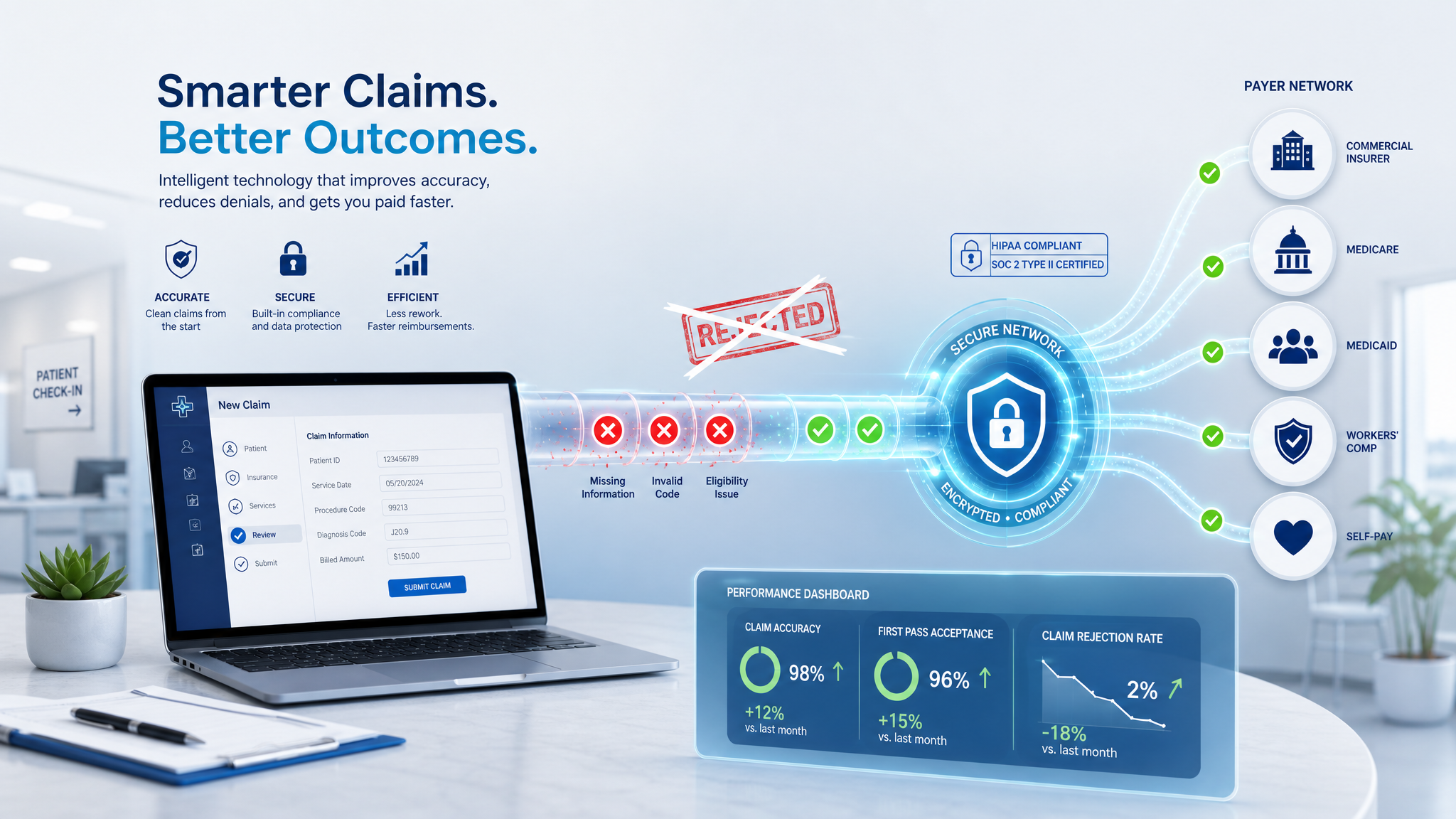
Healthcare organizations lose time and revenue when claims are rejected for avoidable reasons—missing data, coding mismatches, eligibility issues, or payer-specific formatting requirements. A healthcare clearinghouse acts as the “quality control + routing hub” between providers and payers, helping catch errors early, standardize claim files, and improve first-pass acceptance rates. This article explains the healthcare clearinghouse…
-
Telehealth Billing Best Practices: Avoiding Denials and Maximizing Reimbursement

Telehealth Billing Best Practices: Avoiding Denials and Maximizing Reimbursement Introduction The telehealth industry has experienced explosive growth over the past few years, fundamentally transforming how healthcare services are delivered. While this shift offers tremendous benefits—improved patient access, reduced overhead costs, and enhanced care continuity—it has also introduced complex billing challenges that many healthcare organizations struggle…
-
Cybersecurity Essentials for Healthcare Billing Operations

Healthcare billing operations sit at the intersection of patient care, financial data, and regulatory compliance. Every claim, payment record, eligibility check, and account update can involve protected health information, making billing systems a prime target for cybercriminals. For organizations handling medical billing, cybersecurity is no longer just an IT concern. It is a business-critical responsibility…
Search
Archive
Recent Posts
- The Role of Electronic Remittance Advice (ERA) in Streamlining Healthcare Payments

- CPT Code Updates for 2026: What Every Medical Coder Needs to Know

- How to Reduce Claim Denials and Improve First-Pass Acceptance Rates
- HIPAA Compliance Checklist for Medical Billing Teams in 2026
- Understanding EDI Transactions: A Beginner’s Guide for Healthcare Providers

Gallery