-
The Role of Electronic Remittance Advice (ERA) in Streamlining Healthcare Payments

Somewhere in every medical practice, there’s a billing specialist staring at a stack of paper Explanation of Benefits forms, manually keying payment data into a practice management system, and silently questioning their career choices. It’s tedious, error-prone, and — in 2026 — completely unnecessary. Electronic Remittance Advice, or ERA, has been around for years. But…
-
CPT Code Updates for 2026: What Every Medical Coder Needs to Know

Every January, the American Medical Association rolls out its latest edition of the Current Procedural Terminology code set, and 2026 is no small update. This year’s release brings a total of 418 changes — 288 brand-new codes, 84 deletions, and 46 revisions — reflecting rapid shifts in digital health adoption, the mainstreaming of artificial intelligence…
-
How to Reduce Claim Denials and Improve First-Pass Acceptance Rates
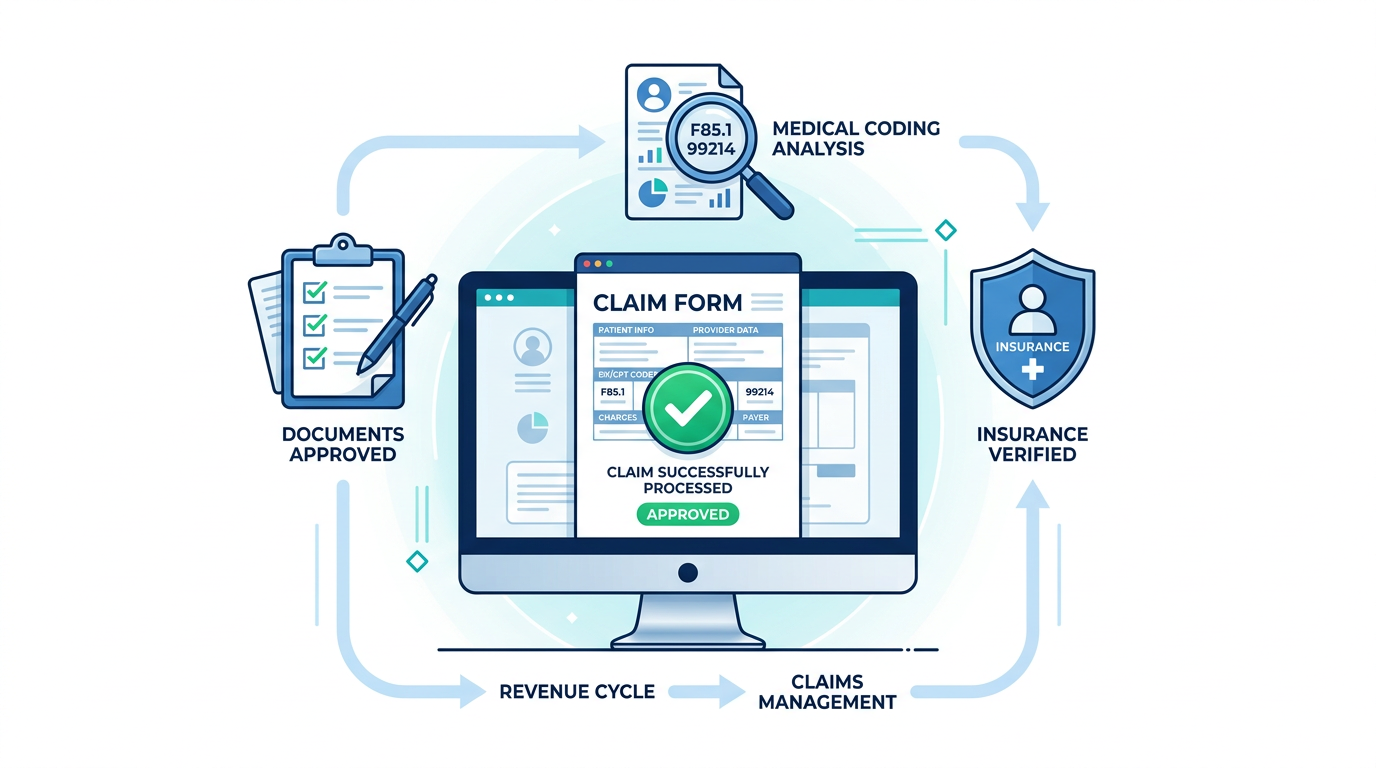
Claim denials create extra work for billing teams, delay reimbursement, and make revenue less predictable. Although follow-up and appeals are important, the most effective way to reduce claim denials is to prevent avoidable errors before claims reach the payer. That requires coordination across the revenue cycle—from patient registration and insurance verification to clinical documentation, coding,…
-
HIPAA Compliance Checklist for Medical Billing Teams in 2026
Medical billing teams sit at the crossroads of patient data and financial operations, handling everything from insurance claims to payment records loaded with electronic Protected Health Information (ePHI). That position makes them a prime target for both cyberattacks and regulatory scrutiny. With the Office for Civil Rights (OCR) resolving a record number of enforcement actions…
-
Understanding EDI Transactions: A Beginner’s Guide for Healthcare Providers

Electronic data interchange, or EDI, is the structured electronic exchange of administrative and financial information between healthcare providers, health plans, and clearinghouses. Practices use EDI to submit claims, verify coverage, check claim status, request prior authorization, and receive electronic remittance advice. EDI transactions healthcare workflows can initially seem complicated because exchanges are identified by numbers.…
-
How to Reduce Denied Claims: A Step-by-Step Revenue Cycle Audit

Denied claims cost healthcare organizations billions of dollars every year. According to industry estimates, the average denial rate across U.S. healthcare providers hovers between 5% and 10%, with some specialties experiencing rates significantly higher. Each denied claim carries a rework cost — staff time, resubmission effort, delayed cash flow — that compounds quickly across hundreds…
-
Top Revenue Cycle Management KPIs Every Healthcare Leader Should Track

The financial health of any healthcare organization depends on how efficiently it moves a patient encounter from scheduling to final payment. Yet many leaders still rely on gut instinct or outdated spreadsheets to gauge that process. Tracking the right revenue cycle management KPIs replaces guesswork with clarity — surfacing bottlenecks before they erode margins and…
-
How to Choose the Right Healthcare Clearinghouse for Your Practice or Organization

Managing claims, eligibility checks, payment posting, and payer communication can consume valuable time for healthcare practices and organizations. A reliable healthcare clearinghouse helps simplify these processes by securely transmitting electronic claims between providers and insurance payers, identifying errors before submission, and supporting a smoother revenue cycle. However, not every clearinghouse is the right fit for…
-
Clearinghouse vs Billing Service: Key Differences Healthcare Teams Should Understand

In the complex ecosystem of modern healthcare administration, the financial stability of a practice is often determined by the efficiency of its back-office operations. For healthcare administrators and providers, navigating the terminology of the revenue cycle can be confusing. Two terms that are frequently used in the same breath but serve vastly different purposes are…
-
Automation in Medical Billing: Benefits, Risks, and Best Practices for Providers

The business of medicine is becoming increasingly complex. As healthcare providers strive to deliver high-quality patient care, they are simultaneously burdened by an intricate web of insurance regulations, evolving coding standards, and a demanding revenue cycle. In this environment, the shift toward automation in medical billing has moved from a “cutting-edge” upgrade to an essential…
Search
Archive
Recent Posts
- The Role of Electronic Remittance Advice (ERA) in Streamlining Healthcare Payments

- CPT Code Updates for 2026: What Every Medical Coder Needs to Know

- How to Reduce Claim Denials and Improve First-Pass Acceptance Rates
- HIPAA Compliance Checklist for Medical Billing Teams in 2026
- Understanding EDI Transactions: A Beginner’s Guide for Healthcare Providers

Gallery