-
From Facility-Based to Independent: Transitioning Your Direct Care Career

For many healthcare professionals, working in hospitals, clinics, or healthcare facilities is the standard career path. It offers stability, structure, and a predictable routine. However, over time, many direct care professionals—especially nurse practitioners (NPs)—begin to feel limited by rigid schedules, administrative pressure, and lack of independence. This is why more professionals are now exploring independent…
-
Preventing Burnout in Healthcare: The Role of Collaborative Support Systems

The healthcare industry is currently facing a quiet but profound crisis: the erosion of its most valuable asset—the people. Healthcare worker burnout is no longer just a “human resources issue”; it is a systemic threat to patient safety, clinical outcomes, and the sustainability of our medical infrastructure. While individual resilience and “self-care” are often touted…
-
The Evolution of Direct Care Models: From Hospital to Home to Hybrid

Healthcare delivery systems are undergoing a profound transformation. As patient expectations rise and care becomes more complex, direct care models evolution has emerged as a defining industry trend. What began as a hospital-centric system is now shifting toward home-based and hybrid healthcare delivery models that emphasize accessibility, efficiency, and personalization. This evolution reflects a broader…
-
Quality Metrics in Direct Care: How NP Oversight Improves Outcomes

In modern healthcare, quality is no longer measured by volume alone—it’s defined by outcomes, patient experience, and consistency of care. For direct care models, where accessibility and continuity are central, quality metrics play a critical role in demonstrating value. One of the most effective drivers of improved performance across these metrics is nurse practitioner (NP)…
-
Building a Career Path: From CNA to NP – Real Stories of Success

For many healthcare professionals, the journey from Certified Nursing Assistant (CNA) to Nurse Practitioner (NP) is not just a career upgrade—it’s a powerful story of perseverance, education, and professional growth. What makes this path especially inspiring is that it starts at the very foundation of patient care and evolves into advanced clinical leadership. In this…
-
Training Requirements for CNAs Working in NP-Led Clinics

To work in NP-led clinics, Certified Nursing Assistants (CNAs) must complete state-approved training, pass certification exams, and develop strong clinical, communication, and safety skills. Additional experience in outpatient care, patient monitoring, and team-based healthcare environments significantly improves job prospects in nurse practitioner–led healthcare settings. Introduction NP-led clinics are transforming modern healthcare by offering accessible, high-quality…
-
The Rising Demand for Home Healthcare: Where NPs Fit In

The home healthcare industry is experiencing the most significant boom in its history. Driven by an aging population, a chronic disease wave, and a healthcare system struggling under demand, the need for personalized, at-home medical care has never been greater. At the center of this transformation stands a powerful and growing workforce: Nurse Practitioners (NPs).…
-
How Direct Care Workers Can Partner with Nurse Practitioners for Better Patient Outcomes
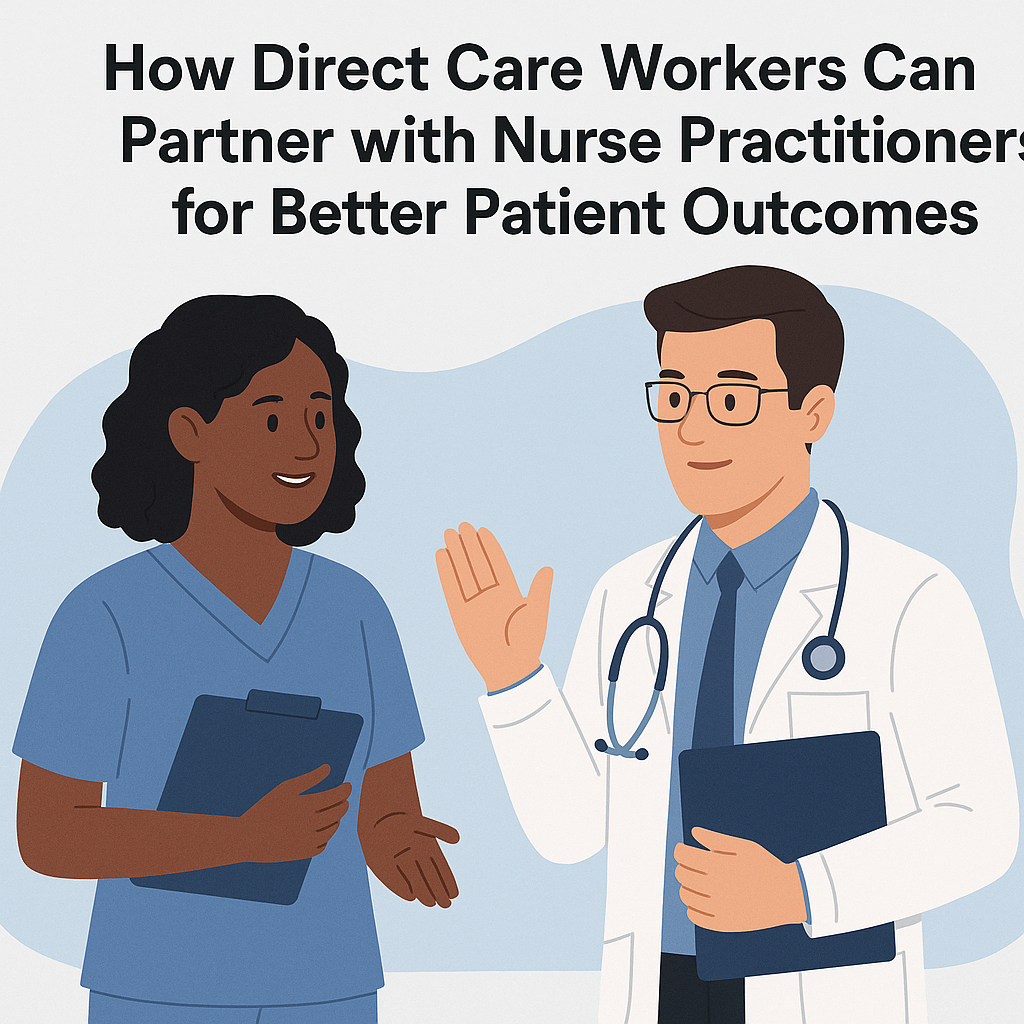
Direct care workers spend more time with patients than almost any other healthcare professional. Nurse practitioners bring advanced clinical expertise and decision-making capabilities. When the two collaborate effectively, the result is improved care quality, faster recovery, and higher patient satisfaction. This guide explains how direct care workers and NPs can work together, highlighting communication methods,…
-
How Long Does It Take To Become a Nurse’s Aide?

Becoming a Nurse’s Aide (often called a Certified Nursing Assistant or CNA) is one of the fastest ways to enter the healthcare field. Many people choose this career because it offers meaningful work, hands-on patient experience, and a pathway to future healthcare roles—all without spending years in school. If you’re considering this career, one of…
-
What Makes Personal Care Workers Stay Longer in Long-Term Care Facilities? Insights from the National Health Insurance Service Big Data

Employee retention is one of the most important challenges in the long-term care (LTC) industry. Personal care workers form the backbone of caregiving—yet many facilities struggle with high turnover rates. Understanding why some workers stay longer can help facilities improve care quality, reduce hiring costs, and build a more stable workforce. A recent analysis using…
Search
Archive
Recent Posts
- The Role of Electronic Remittance Advice (ERA) in Streamlining Healthcare Payments

- CPT Code Updates for 2026: What Every Medical Coder Needs to Know

- How to Reduce Claim Denials and Improve First-Pass Acceptance Rates

- HIPAA Compliance Checklist for Medical Billing Teams in 2026
- Understanding EDI Transactions: A Beginner’s Guide for Healthcare Providers

Gallery