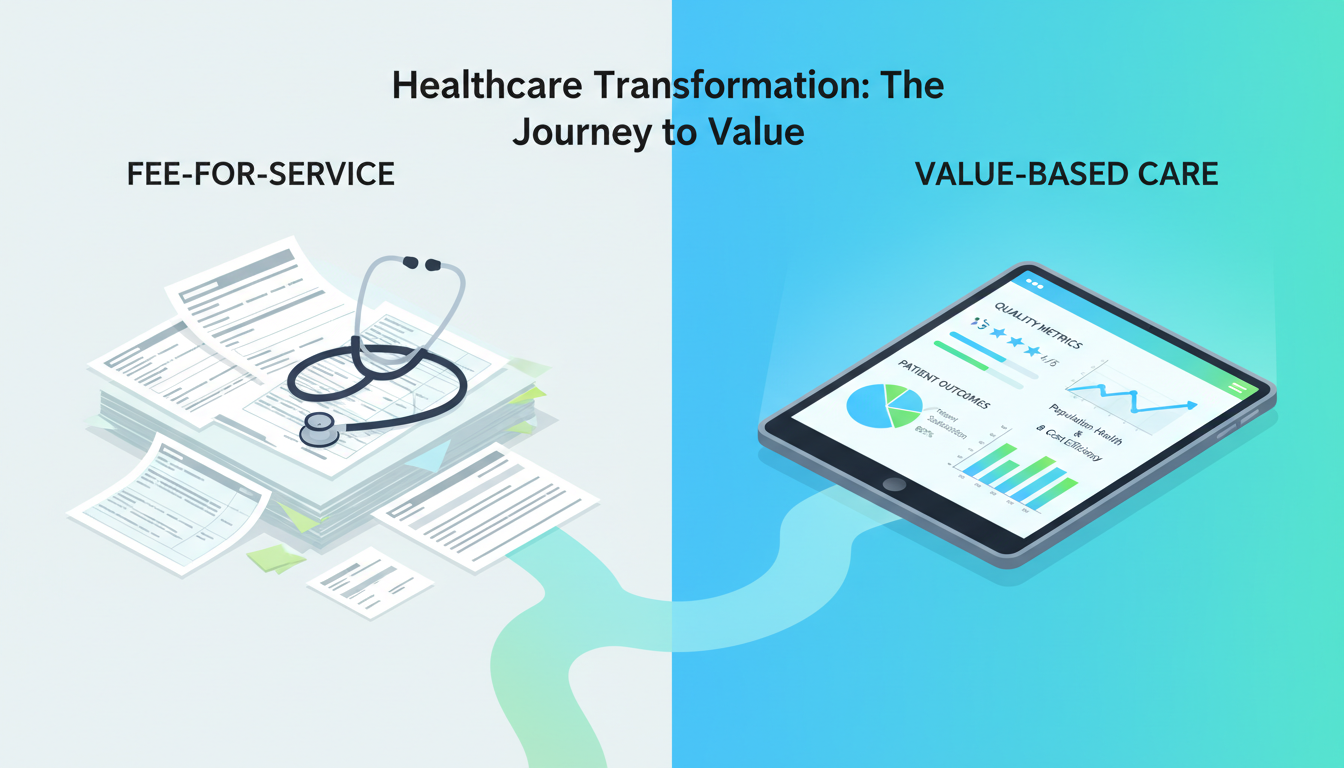
As healthcare costs rise and patient expectations grow, organizations across the U.S. are moving away from traditional fee-for-service (FFS) reimbursement toward value-based care. Instead of being paid purely based on volume of services delivered, providers are increasingly reimbursed based on the quality and outcomes of the care they provide.
This shift can feel complex and even risky for providers used to the predictability of FFS, but with a clear roadmap it becomes an opportunity: better outcomes for patients, more coordinated care, and financial rewards for doing the right thing. Resources like NP Collaborator offer support and services that can help practices navigate these changes effectively.
In this guide, we’ll walk through what the transition means, the key concepts you need to understand, and practical steps to move your organization toward value-based care.
From Fee-for-Service to Value-Based Care: What’s Changing?
Fee-for-Service (FFS): Volume Over Value
Under traditional FFS, providers are paid for each visit, test, or procedure. This model:
- Rewards volume of services rather than outcomes
- Can inadvertently encourage fragmented and episodic care
- Makes it harder to justify preventive and care-coordination activities that aren’t directly billable
While FFS is familiar and straightforward, it does not inherently incentivize keeping patients healthy or preventing avoidable utilization.
Value-Based Care: Outcomes Over Outputs
Value-based care links payment to quality, efficiency, and patient outcomes. Instead of asking, “How many services did we provide?” payers ask, “How well did we care for the patient—and at what cost?”
Core features include:
- Focus on clinical quality metrics (e.g., control of chronic diseases, screening rates)
- Attention to patient experience and satisfaction
- Emphasis on total cost of care, including preventable hospitalizations and ED visits
- Shared financial risk and reward, often across a population of patients
For providers, this means adjusting workflows, data capabilities, and culture—but it also opens paths to new revenue streams, stability, and deeper patient relationships.
Key Concepts in Value-Based Reimbursement
To navigate this shift, it’s essential to understand the building blocks of value-based payment models.
1. Outcome-Based Payment
Outcome-based payment directly links reimbursement to measurable results, such as:
- Blood pressure or A1c control for patients with chronic disease
- Reduced hospital readmissions
- Improved adherence to evidence-based guidelines
- Better patient-reported health status
In these models, you may receive:
- Bonuses for meeting or exceeding targets
- Withholds or penalties if targets are not met
Effective outcome-based care requires accurate data capture, population health management, and continuous quality improvement.
2. Quality Metrics
Quality metrics are the foundation of value-based care contracts. They can include:
- Clinical process measures (e.g., appropriate medication use, follow-up after hospitalization)
- Outcome measures (e.g., mortality, complication rates, disease control)
- Patient experience measures (e.g., access, communication, trust)
- Utilization metrics (e.g., avoidable ED visits, readmissions)
Providers must:
- Know which metrics are tied to specific contracts or programs
- Ensure accurate documentation and coding
- Implement standardized workflows to consistently meet metric requirements
Many organizations seek external support for metric selection, workflow design, and analytics. Services like those offered by Np Collaborator can help practices standardize care pathways and build data-driven processes around key measures.
3. Bundled Payments
Bundled payments provide a single, pre-defined payment for all services related to a particular episode of care (e.g., a joint replacement, maternity care, or a defined chronic disease bundle).
Under bundles, providers:
- Assume responsibility for both costs and outcomes across the episode
- Must coordinate across settings (hospital, post-acute, outpatient)
- Share in savings when managing efficiently and maintaining quality
Success with bundled payments requires:
- Strong care coordination and discharge planning
- Close relationships with post-acute care providers
- Real-time tracking of costs and outcomes across the full episode
4. Patient Outcomes and Experience
In value-based care, patient outcomes aren’t limited to lab results. They include:
- Functional status (e.g., can the patient perform daily activities?)
- Symptom burden (pain, dyspnea, fatigue)
- Mental health and well-being
- Patient-reported outcome measures (PROMs)
At the same time, patient experience—access, communication, respect, and trust—is increasingly measured and tied to reimbursement.
To improve outcomes and experience, organizations must:
- Engage patients in shared decision-making
- Address social determinants of health where possible
- Invest in education, self-management support, and navigation
How Value-Based Care Changes Provider Compensation
As payment models evolve, so does the way providers are paid:
- Blended or Hybrid Compensation
- Base salary plus FFS components
- Incentive pay tied to quality, outcomes, or patient satisfaction
- Shared savings distributions based on performance
- Risk-Based Compensation
- Providers may share upside and downside risk in contracts
- Compensation can depend on panel performance, not just individual productivity
- Expanded Roles and Team-Based Care
- Nurse practitioners, PAs, RNs, care coordinators, and other professionals play critical roles in managing population health
- Organizations working with advanced practice providers may use partners like Np Collaborator to help optimize scope of practice, compliance, and integration into value-based models
The emphasis moves from “how many patients did I see today?” to “how healthy is my panel, and how well are we managing risk and quality?”
A Provider’s Roadmap for Transitioning to Value-Based Care
Step 1: Assess Your Starting Point
Begin with a structured self-assessment:
- What percentage of your revenue is currently value-based vs FFS?
- Which contracts or payers already have quality or risk components?
- How robust are your data and analytics capabilities?
- Do you have care management or population health resources?
- Are your clinicians and staff familiar with quality metrics and documentation standards?
Many organizations benefit from an external evaluation of their readiness, contract mix, and risk profile. Partnering with consultants or clinical collaborators, such as those at NP Collaborator, can help identify immediate opportunities and gaps.
Step 2: Clarify Strategy and Risk Tolerance
Not all value-based models are equal. You should define:
- How quickly you want to move from upside-only to two-sided risk
- Which patient populations or service lines are best suited for initial efforts (e.g., chronic disease programs, specific surgical episodes)
- How you will align organizational strategy with contracting, clinical operations, and IT investments
Aim to start where you have:
- High patient volume
- Existing clinical strengths
- Potential for measurable improvement
Step 3: Build the Data and Reporting Infrastructure
Data is the backbone of value-based care. You need to be able to:
- Identify attributed populations and risk-stratify them
- Track quality metrics, costs, and utilization in near real time
- Produce actionable reports for clinicians, care managers, and leadership
Key capabilities include:
- An EHR that supports structured data capture and reporting
- Population health tools and registries
- Data governance and data quality processes
If you lack internal capacity, consider partnering with organizations or platforms that specialize in clinical workflows, documentation, and compliance, such as NP Collaborator, which can help ensure providers capture the necessary data while maintaining clinical efficiency.
Step 4: Redesign Care Around Population Health
Shifting from episodic care to population health means:
- Proactively identifying high-risk and rising-risk patients
- Implementing chronic disease management programs (e.g., for diabetes, CHF, COPD)
- Utilizing care coordinators and nurse navigators to close gaps in care
- Standardizing evidence-based care pathways and checklists
Team-based care becomes central:
- NPs and PAs can manage large portions of chronic and preventive care
- RNs can conduct outreach, education, and care coordination
- Behavioral health integration addresses mental health and substance use
Collaborative models that leverage advanced practice providers—supported by partners like NP Collaborator—can significantly enhance capacity for proactive, high-value care.
Step 5: Align Provider Incentives and Culture
Culture and incentives must support the new model:
- Embed quality and outcomes goals in provider scorecards
- Tie a portion of compensation to agreed-upon metrics, not just RVUs
- Provide transparent, frequent feedback on performance
- Recognize and reward team-based achievements
Invest in change management:
- Educate clinicians on why value-based care matters—for patients, for the organization, and for themselves
- Offer training on documentation, coding, risk adjustment, and quality workflows
- Create forums where frontline staff can surface challenges and propose improvements
Step 6: Optimize Contracting and Risk Management
As you mature:
- Evaluate which contracts yield the best alignment with your capabilities
- Negotiate contract terms that reflect realistic benchmarks, risk corridors, and attribution methods
- Avoid jumping too quickly into high-risk arrangements without the necessary infrastructure
You may need expert guidance in:
- Reading and negotiating value-based contracts
- Aligning clinical workflows with contract requirements
- Ensuring compliance with evolving state and federal regulations affecting advanced practice providers
Advisory services and clinical collaborators such as Np Collaborator can help providers interpret requirements, stay compliant, and implement the right operational changes.
Step 7: Continuously Improve
Value-based care is not a one-time project; it’s an ongoing journey:
- Use Plan-Do-Study-Act (PDSA) cycles to test and refine interventions
- Monitor results and adjust care pathways based on real-world data
- Expand successful programs to additional populations or service lines
Frameworks for continuous quality improvement and regular performance reviews are essential to sustaining gains and scaling success.
Common Challenges—and How to Address Them
- Data Gaps and Fragmented Information
- Solution: Standardize documentation, invest in data integration, and partner with experts who can help configure your EHR and workflows around value-based metrics.
- Clinician Resistance or Fatigue
- Solution: Engage clinicians early, focus on meaningful outcome measures, reduce low-value administrative burden, and demonstrate how value-based care can support professional satisfaction.
- Limited Care Management Resources
- Solution: Prioritize high-risk populations first, use telehealth and remote monitoring, and leverage advanced practice providers with the support of organizations like Np Collaborator
- Unclear Financial Impact
- Solution: Develop financial models to track revenue, costs, and shared savings; start with upside-only arrangements when possible; and incrementally grow your risk profile.
The Opportunity Ahead
The shift from fee-for-service to value-based care is reshaping how healthcare is delivered and financed. While it introduces complexity, it also aligns financial incentives with what providers and patients ultimately want: better health outcomes, more coordinated care, and sustainable costs.
By:
- Understanding key concepts like outcome-based payment, quality metrics, bundled payments, and patient outcomes
- Building robust data and care management infrastructure
- Aligning provider compensation and culture
- Partnering with experienced collaborators such as for Np Collaborator support with clinical workflows, compliance, and advanced practice provider integration