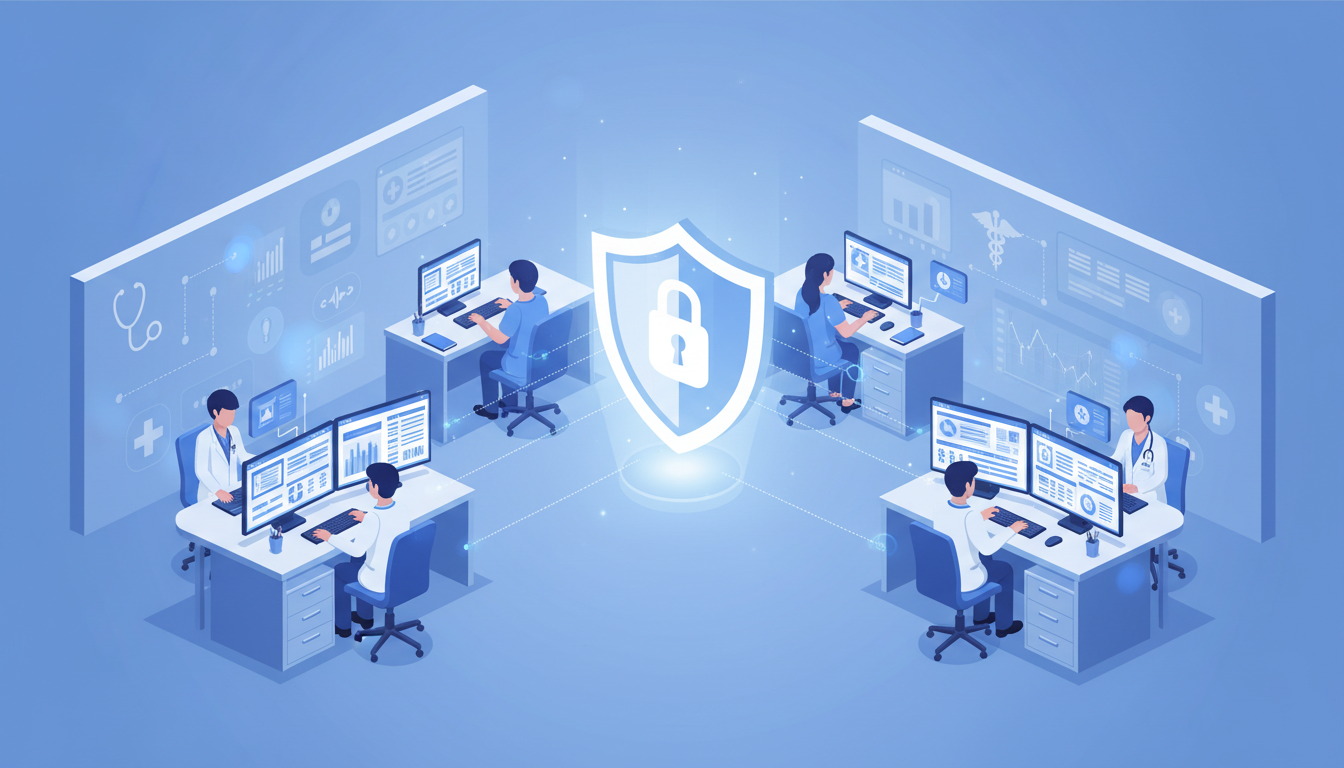
Healthcare billing operations sit at the intersection of patient care, financial data, and regulatory compliance. Every claim, payment record, eligibility check, and account update can involve protected health information, making billing systems a prime target for cybercriminals. For organizations handling medical billing, cybersecurity is no longer just an IT concern. It is a business-critical responsibility tied directly to patient trust, operational continuity, and HIPAA security compliance.
As digital workflows continue to expand across providers, billing teams, clearinghouses, and revenue cycle partners, the risk landscape becomes more complex. Cyberattacks aimed at healthcare organizations often seek one thing above all else: access to sensitive data. This includes patient demographics, insurance details, medical records, payment information, and other forms of PHI. A single vulnerability in billing operations can open the door to fraud, ransomware, reputational damage, and costly regulatory consequences.
This guide outlines the cybersecurity essentials every healthcare billing operation should understand in order to strengthen billing data protection and improve overall resilience.
Why Healthcare Billing Operations Are High-Value Targets
Healthcare billing environments process a constant stream of valuable information. Unlike some industries where a stolen credit card can be canceled quickly, healthcare data is long-lasting and can be exploited in multiple ways. Attackers may use this data for identity theft, insurance fraud, phishing, or extortion.
Billing teams are especially exposed because they often:
- Access large volumes of PHI and insurance information
- Use multiple software platforms, portals, and payer connections
- Exchange files with vendors, providers, and clearinghouses
- Operate under time-sensitive workflows where small interruptions can create major backlogs
- Depend on email and shared systems that may be vulnerable to phishing or credential theft
These factors make healthcare billing operations a practical target for both opportunistic and highly coordinated attacks.
The Most Common Cybersecurity Threats in Billing Operations
Understanding the threat landscape is the first step toward better medical records safety and stronger operational security.
Phishing Attacks
Phishing remains one of the most common attack methods in healthcare. Billing staff may receive emails that appear to come from insurers, providers, clearinghouses, or internal teams. These messages often contain malicious links, fake login pages, or infected attachments designed to steal credentials or install malware.
Because billing teams work quickly and manage many communications every day, phishing attacks can be especially effective if staff are not trained to recognize warning signs.
Ransomware
Ransomware prevention is a top concern in healthcare cybersecurity. In a ransomware event, attackers encrypt files or systems and demand payment to restore access. For billing operations, this can halt claims submission, delay reimbursements, disrupt patient billing, and create significant financial strain.
If billing records, medical records, or connected systems become unavailable, the impact can spread quickly across the organization.
Unauthorized Access
Weak passwords, shared accounts, and lack of multi-factor authentication increase the risk of unauthorized access. Once attackers gain entry, they may move laterally through systems, extract PHI, alter financial records, or maintain silent access for long periods.
Unauthorized access can also come from insider threats, whether intentional or accidental.
Data Breaches
A data breach involving healthcare billing records can expose names, addresses, Social Security numbers, insurance policy details, diagnoses, treatment codes, and payment information. These incidents may trigger HIPAA reporting obligations, legal exposure, and loss of confidence among patients and partners.
Third-Party Vulnerabilities
Healthcare billing often depends on practice management software, clearinghouses, cloud platforms, outsourced billing vendors, and other third-party services. If one of these partners has weak security controls, your organization may inherit significant risk.
Essential Cybersecurity Practices for Billing Data Protection
Strong security in billing operations requires a layered approach. No single tool or policy is enough on its own. Instead, organizations should combine technical safeguards, employee awareness, access controls, and response planning.
Limit Access to PHI
Not every employee needs access to all billing and patient information. Apply role-based access controls so staff can only view the data necessary for their job responsibilities. This supports both PHI protection and the HIPAA principle of minimum necessary access.
Access permissions should be reviewed regularly, especially when employees change roles or leave the organization.
Use Multi-Factor Authentication
Passwords alone are no longer sufficient. Multi-factor authentication adds an extra layer of security by requiring users to verify their identity through a second factor such as an app, token, or code. This significantly reduces the risk of credential-based attacks.
MFA should be enabled for billing platforms, email accounts, remote access tools, payer portals, and administrative systems.
Encrypt Data in Transit and at Rest
Encryption helps protect sensitive information from unauthorized exposure. Billing data should be encrypted both while stored and while being transmitted between systems, vendors, and business associates. This is particularly important for claims files, remittance data, patient statements, and internal reports containing PHI.
Encryption does not eliminate all risk, but it can greatly reduce the impact of a breach.
Strengthen Email Security
Since phishing is such a persistent threat, organizations should invest in secure email filtering, link scanning, attachment screening, and domain protection measures. Billing teams should also be taught to verify unexpected requests, especially those involving login credentials, payment changes, or file downloads.
Even simple policies, such as confirming sensitive requests through a second communication channel, can prevent major incidents.
Keep Systems Patched and Updated
Unpatched software is a common entry point for attackers. Billing software, operating systems, browsers, plugins, firewalls, and endpoint protection tools should all be updated regularly. Vulnerability management should be part of routine operations, not something addressed only after an issue arises.
Back Up Critical Billing Data
Reliable backups are essential for ransomware prevention and business continuity. Backups should be performed regularly, stored securely, and tested to confirm they can be restored successfully. It is best practice to maintain offline or isolated backups so attackers cannot easily encrypt them along with production systems.
For healthcare billing operations, backup priorities may include:
- Claims and remittance records
- Payment posting data
- Patient account balances
- Reporting dashboards
- Audit logs
- Interface and configuration settings
Monitor for Suspicious Activity
Logging and monitoring can help teams detect unusual behavior before a small issue becomes a major breach. Examples include repeated failed login attempts, access from unusual locations, large data exports, or account activity outside normal business hours.
Organizations should also review audit trails within billing systems to identify anomalies involving sensitive records.
Secure Remote Work and Mobile Access
Many billing professionals work remotely or use cloud-based systems. Remote access should be secured through VPNs, MFA, managed devices, and clear security policies. Personal devices and unsecured home networks can increase exposure if safeguards are not in place.
HIPAA Security and Billing Operations
Healthcare organizations and their business associates must align cybersecurity practices with HIPAA security requirements. The HIPAA Security Rule requires covered entities and business associates to implement administrative, physical, and technical safeguards to protect electronic PHI.
For billing operations, this includes:
- Conducting regular risk assessments
- Controlling workforce access to ePHI
- Training employees on security awareness
- Maintaining audit controls
- Protecting against malicious software
- Establishing contingency and incident response plans
- Verifying that vendors and partners meet appropriate security standards
HIPAA compliance should not be treated as a checklist completed once and forgotten. Security compliance is an ongoing process that must evolve with new threats, technologies, and workflow changes.
Employee Training Is One of the Strongest Defenses
Technology matters, but people remain a critical line of defense. Billing staff should receive regular cybersecurity training tailored to their daily tasks. Generic awareness sessions are not enough. Teams need practical guidance on how to identify suspicious emails, protect login credentials, handle PHI securely, and report concerns quickly.
Training topics should include:
- Recognizing phishing and social engineering
- Safe password practices
- Proper handling of PHI and medical records
- Secure file transfer methods
- Device and workstation security
- Incident reporting procedures
Frequent refreshers and simulated phishing exercises can help reinforce good habits over time.
How to Prepare for a Data Breach or Cyber Incident
Even strong safeguards cannot eliminate risk entirely. That is why every healthcare billing operation should have a documented incident response plan. A fast, organized response can reduce the damage caused by a data breach and help restore operations more efficiently.
A practical incident response plan should define:
- Who must be notified internally
- How affected systems are isolated
- How evidence is preserved
- When legal, compliance, and IT teams are involved
- How patients, clients, or partners are notified if required
- What steps are needed to restore billing functions safely
Organizations should also rehearse their response plan through tabletop exercises so teams know what to do under pressure.
Vendor and Clearinghouse Security Matters Too
Billing security does not stop at the internal network. Because healthcare billing depends heavily on external systems and service providers, organizations must evaluate third-party risk carefully. Vendors that handle claims, eligibility data, payment processing, document storage, or patient communications may all have access to sensitive information.
Before partnering with any vendor or clearinghouse, organizations should assess:
- Security policies and controls
- Encryption practices
- Access management standards
- Incident response readiness
- Audit and logging capabilities
- HIPAA compliance posture
- Business associate agreement requirements
Ongoing vendor reviews are just as important as initial due diligence.
Building a Culture of Security in Revenue Cycle Operations
Cybersecurity is strongest when it becomes part of the organizational culture rather than a separate technical function. Billing leaders should communicate clearly that protecting PHI, preserving medical records safety, and preventing fraud are shared responsibilities across the revenue cycle.
A security-focused culture includes:
- Clear policies that employees can understand and follow
- Leadership support for secure workflows
- Routine reviews of access, processes, and system risks
- Open reporting of suspicious events without fear of blame
- Regular updates to reflect new threats and technologies
When teams understand why security matters and how their actions contribute to protection, compliance becomes more effective and operational resilience improves.
Final Thoughts
Healthcare billing operations manage some of the most sensitive and valuable data in the organization. That makes cybersecurity essential, not optional. Strong billing data protection requires more than antivirus software or occasional training. It demands a proactive strategy that addresses PHI protection, ransomware prevention, access control, employee awareness, vendor oversight, and HIPAA security obligations.