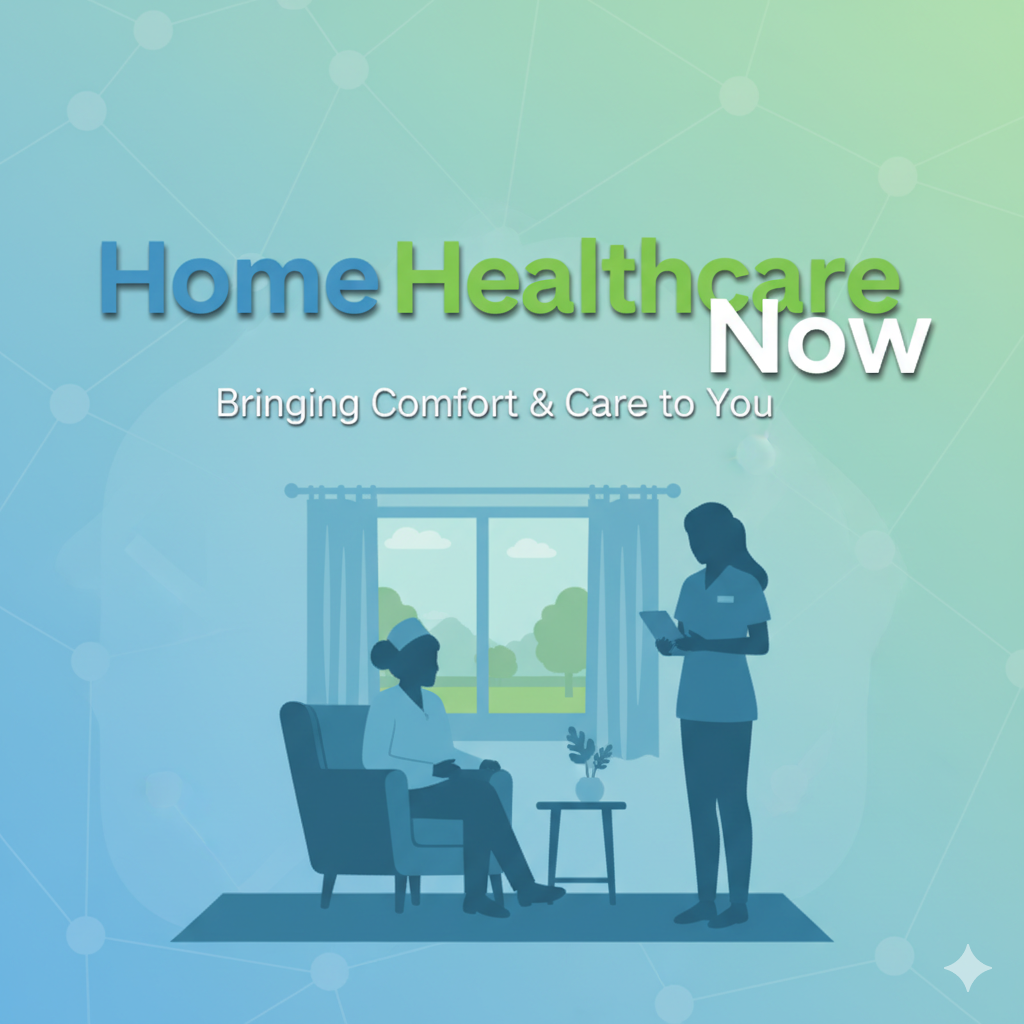
In today’s world, the ability to deliver professional care directly in the home—rather than in a hospital or facility—has become increasingly important. With the term “Home Healthcare Now” we capture the urgency, the setting, and the reality of skilled, patient-centred care provided at home.
What does “Home Healthcare Now” mean?
“Home Healthcare Now” refers to:
- Skilled nursing care, therapy (physical, occupational, speech), wound care, infusion therapy or other clinical interventions that are performed in the home setting.
- Supportive home-based services that allow individuals — older adults, people recovering from surgery or acute illness, or those with chronic conditions — to remain in their familiar environment.
- Timely responsiveness: care delivered when it matters, at the right moment, in the home.
- The convergence of clinical, operational, educational and technological factors that make home-based care viable, safe, efficient and meaningful.
Why it matters
- Many patients prefer to be at home rather than a hospital or long-term care facility. The home environment often supports comfort, familiarity, better sleep, and reduced risk of facility-based complications.
- Health systems are increasingly shifting resources into home care (both for cost-efficiencies and for better patient outcomes).
- Skilled home health has become more complex: patients discharged earlier, technology in the home (remote monitoring, infusion therapies, etc.), and interdisciplinary teams working outside the walls of hospitals.
- Timeliness is critical: “Now” means care-coordination, fast response, avoiding hospital readmissions, and giving patients what they need when they need it.
Key components of Home Healthcare Now
- Clinical Excellence
- Registered nurses, licensed therapists and home health aides working in the home environment.
- Use of evidence-based protocols, infection control, medication reconciliation, wound care, infusion therapy and more. (See how the journal Home Healthcare Now focuses on clinical and operational issues in home care).
- Continuous assessment and the ability to escalate care if needed.
- Registered nurses, licensed therapists and home health aides working in the home environment.
- Operational Readiness
- Scheduling, care coordination, documentation in the home environment.
- Use of technology: telehealth, remote monitoring, mobile documentation to support “now”-care.
- Rapid mobilization of services — staff, equipment, home modifications.
- Scheduling, care coordination, documentation in the home environment.
- Educational & Supportive Resources
- Training of home health personnel on complexities of home care practice (e.g., working in less-controlled environments than hospitals).
- Empowering patients and families: teaching medication management, wound care, ADL support.
- Offering resources and guidance to help providers and caregivers understand home-based care trends.
- Training of home health personnel on complexities of home care practice (e.g., working in less-controlled environments than hospitals).
- Patient-Centred Home Setting
- Care delivered in the safe, familiar environment of the patient’s home.
- Focus on preserving independence, preventing hospitalizations, and improving quality of life.
- Holistic view: addressing not just medical needs but functional, social, environmental and emotional aspects of care.
- Care delivered in the safe, familiar environment of the patient’s home.
What Home Healthcare Now means for clearinghouses and payer processes
At the Direct Care Clearinghouse, the concept of “Home Healthcare Now” underscores key processes in home care reimbursement, documentation, claims processing and regulatory compliance:
- Clearinghouses must enable rapid, accurate submission of home health claims (often under Medicare, Medicaid or private payers).
- Ensuring home-care providers are equipped with correct codes (e.g., 837/835 transactions), eligibility verification, claim scrubbing and tracking. (See industry insights on choosing the right clearinghouse for home health operations).
- Supporting agency workflows: intake, authorization, scheduling, electronic visit verification (EVV), documentation and billing—all aligned to a “now” mindset of timely home care delivery.
- Monitoring outcomes: avoiding denials, reducing delays, ensuring home health providers are compensated so they can maintain quality “now” care.
Trends & Importance
- The journal Home Healthcare Now emphasizes how home care nursing is evolving — providing insights into transitions of care, technology at home, medication management and wound care.
- The focus on “home” care is aligned with aging populations, preference for aging-in-place, and reductions in hospital lengths of stay.
- Payment models increasingly favour value and outcomes rather than merely facility-based care; therefore home health delivered now with quality matters more than ever.
Why our audience should care
- For providers: adopting the “Home Healthcare Now” mindset means being ready to deliver home-based skilled services swiftly and competently.
- For payers and clearinghouses: establishing workflows, technologies and rules that mirror the pace and demands of home-health in-the-now.
- For patients and families: understanding that home health delivered now means faster access, more comfort and potentially better outcomes.
Getting started: How to align with Home Healthcare Now
- Review your intake and authorization processes: are you ready for rapid deployment of home-based skilled care?
- Evaluate your billing/claims infrastructure: do your systems support quick submission, adjudication and monitoring for home health services?
- Train your clinical staff: home environments differ from hospitals—ensure readiness for the complexities of home care.
- Engage patients/families early: teach home safety, self-management, medication adherence, caregiver support.
- Use analytics: track outcomes, hospital readmissions, and identify where home health can respond faster or better.
Conclusion
“Home Healthcare Now” is not just a phrase—it encapsulates a moment in healthcare delivery: skilled, patient-centred, home-based care delivered responsively, efficiently and effectively. At the Direct Care Clearinghouse, we recognize that today’s home health environment demands systems, staff and workflows that are aligned to this model—and we’re here to support home health agencies, payers and stakeholders in making “now” home health a reality.