To work in NP-led clinics, Certified Nursing Assistants (CNAs) must complete state-approved training, pass certification exams, and develop strong clinical, communication, and safety skills. Additional experience in outpatient care, patient monitoring, and team-based healthcare environments significantly improves job prospects in nurse practitioner–led healthcare settings.
Introduction
NP-led clinics are transforming modern healthcare by offering accessible, high-quality services across primary care, urgent care, and specialty services. As these clinics grow, the demand for skilled Certified Nursing Assistants (CNAs) is rising rapidly. However, CNAs working alongside Nurse Practitioners (NPs) need specialized training beyond traditional hospital preparation. This guide explains the full training requirements, certifications, skills, and career development pathways for CNAs seeking employment in NP-led clinics.

Understanding the Role of CNAs in NP-Led Clinics
Certified Nursing Assistants in NP clinics serve as the backbone of daily patient operations. Unlike hospital environments that focus on acute care, NP clinics emphasize preventive care, chronic disease management, diagnostics, and patient education.
Core Responsibilities Include:
- Recording vital signs and patient histories
- Preparing patients for examinations
- Assisting with minor medical procedures
- Collecting specimens for lab testing
- Maintaining electronic health records
- Supporting patient discharge and follow-ups
Because NPs work autonomously in many states, CNAs must function with high accuracy, responsibility, and adaptability in fast-paced outpatient environments.
1. State-Approved CNA Training Program
All CNAs must complete a state-approved training program, typically consisting of:
- 80–120 hours of classroom instruction
- 40–80 hours of supervised clinical practice
Training covers:
- Basic nursing skills
- Infection prevention
- Patient hygiene and mobility
- Vital sign monitoring
- Legal and ethical responsibilities
2. CNA Certification Examination
After training completion, candidates must:
- Pass a written knowledge exam
- Pass a hands-on clinical skills test
Successful candidates are listed on the state nurse aide registry, making them eligible for employment in NP-led clinics.
3. Background Checks & Health Clearances
Most NP clinics require:
- Criminal background verification
- TB testing
- Immunization records
- Drug screening
Specialized Skills Required for NP Clinic Employment
Unlike long-term care facilities, NP clinics demand broader clinical competencies.
Advanced Skill Areas Include:
- Patient intake and charting using EHR systems
- Blood pressure, glucose monitoring, and ECG prep
- Wound care and infection monitoring
- Medication reconciliation support
- Specimen handling and lab coordination
CNAs who pursue additional certifications in phlebotomy, EKG, or medical assisting gain a strong hiring advantage.
Soft Skills That Strengthen NP Clinic Performance
NP clinics prioritize patient-centered care. CNAs must demonstrate:
- Clear patient communication
- Multitasking under time pressure
- Compassion and professionalism
- Conflict management
- Cultural sensitivity
Strong teamwork is essential because CNAs interact directly with:
- Nurse Practitioners
- Physicians (in collaborative settings)
- Medical assistants
- Front-desk and billing teams
Workplace Scenarios Featuring NP Clinics (Collaborator Integration)
NP clinics often rely heavily on CNA efficiency in daily workflow management. Real-world integration includes:
- CNAs preparing examination rooms before NP consultations
- Pre-visit screenings conducted by CNAs for chronic disease patients
- Assisting NPs during suturing, wound care, and vaccinations
- Post-visit discharge instructions reinforced by CNAs
- Coordination between CNAs and NPs during telehealth sessions
This collaborative approach improves patient throughput, care accuracy, and clinic profitability.
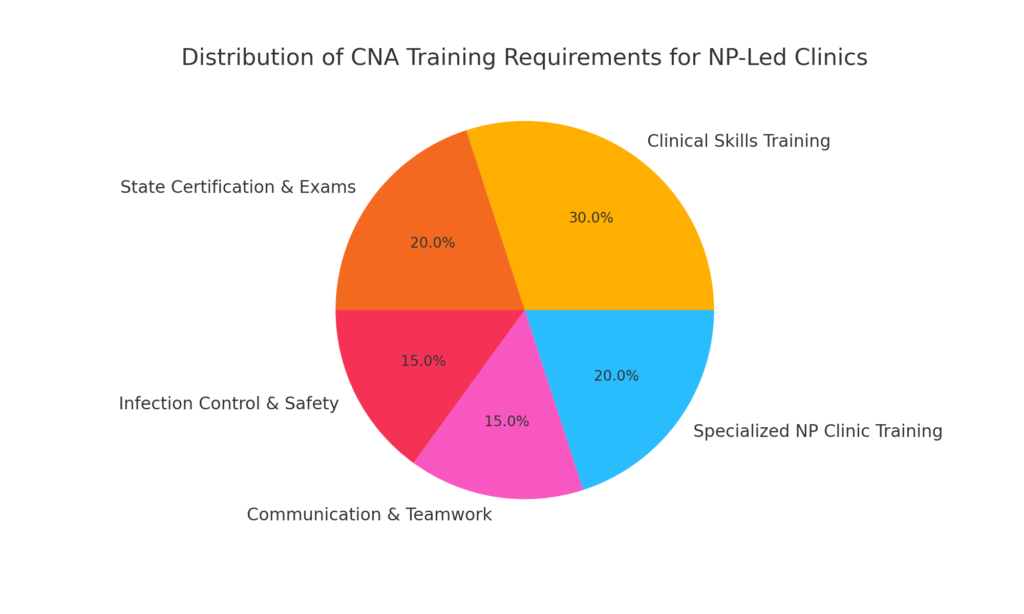
Training Distribution for CNAs in NP Clinics (Pie Chart Section)
Use the downloaded pie chart here to visually display how CNA training time is typically distributed for NP-led clinic readiness:
Suggested Chart Caption:
“Proportional Breakdown of CNA Training for NP-Led Clinical Environments”
Suggested breakdown used in the chart:
- Clinical Skills Training – 30%
- State Certification & Exams – 20%
- Infection Control & Safety – 15%
- Communication & Teamwork – 15%
- Specialized NP Clinic Training – 20%
Career Development Pathways for CNAs in NP Clinics
Working in NP-led clinics opens strong long-term career growth options.
Common Career Advancements Include:
- CNA → Medical Assistant
- CNA → Licensed Practical Nurse (LPN)
- CNA → Registered Nurse (RN)
- CNA → Nurse Practitioner (long-term education path)
NP clinics provide excellent exposure to:
- Diagnostics and treatment planning
- Chronic disease management
- Preventive healthcare models
- Independent provider workflows
This experience makes CNAs highly competitive candidates for nursing programs.
Salary Expectations for CNAs in NP-Led Clinics
While wages vary by state and clinic type, CNAs in outpatient NP settings often earn 5–15% higher wages than those in long-term care due to:
- Higher skill requirements
- Faster workflow demands
- Specialized patient interaction
- Technology-based documentation
Typical ranges:
- Entry-level: $28,000–$35,000 annually
- Experienced outpatient CNA: $36,000–$45,000 annually
How DirectCareClearinghouse.org Supports CNA Career Growth
DirectCareClearinghouse.org plays a key role in supporting:
- Credential verification
- Employment screening
- Compliance documentation
- Workforce staffing efficiency
For NP-led clinics, streamlined credential tracking ensures:
- Faster onboarding
- Reduced compliance errors
- Verified training histories
- Safer patient care delivery
For CNAs, this means greater employment mobility and easier job placement.
How to Prepare for Employment in NP-Led Clinics
To improve your chances of being hired in an NP clinic:
- Choose CNA programs with outpatient clinical exposure
- Complete EHR documentation training
- Add phlebotomy or EKG certification
- Volunteer at primary care clinics
- Develop strong patient communication skills
- Maintain an updated credential profile with DirectCareClearinghouse.org
Frequently Asked Questions
Do CNAs need extra certifications to work in NP clinics?
Not legally required, but certifications in phlebotomy, EKG, and outpatient procedures significantly improve job prospects.
Are NP clinics different from physician clinics for CNAs?
Yes. NPs often manage care independently, requiring CNAs to take on broader patient preparation and follow-up responsibilities.
Is hospital experience required before working in NP clinics?
Not mandatory, but outpatient or community health experience is highly valued.
Can a CNA become a Nurse Practitioner?
Yes, through a structured educational pathway: CNA → RN → MSN or DNP → NP licensure.
Conclusion
Certified Nursing Assistants play a critical role in the success of NP-led clinics. While state certification forms the foundation, additional outpatient-focused skills, technology training, and strong collaboration with Nurse Practitioners are the true differentiators. CNAs who strategically prepare for this environment gain not only better employment opportunities but also a powerful stepping stone into advanced healthcare careers.